
WH SCOTT
Bespoke Lifting Equipment Design, Fabrication & Installation
Lifting beams, spreader beams, gantries and safety-critical steelwork, engineered in-house for your load, span and site — designed, coded-welded, proof load tested and installed across the UK and Ireland.
Bespoke lifting equipment, engineered in-house
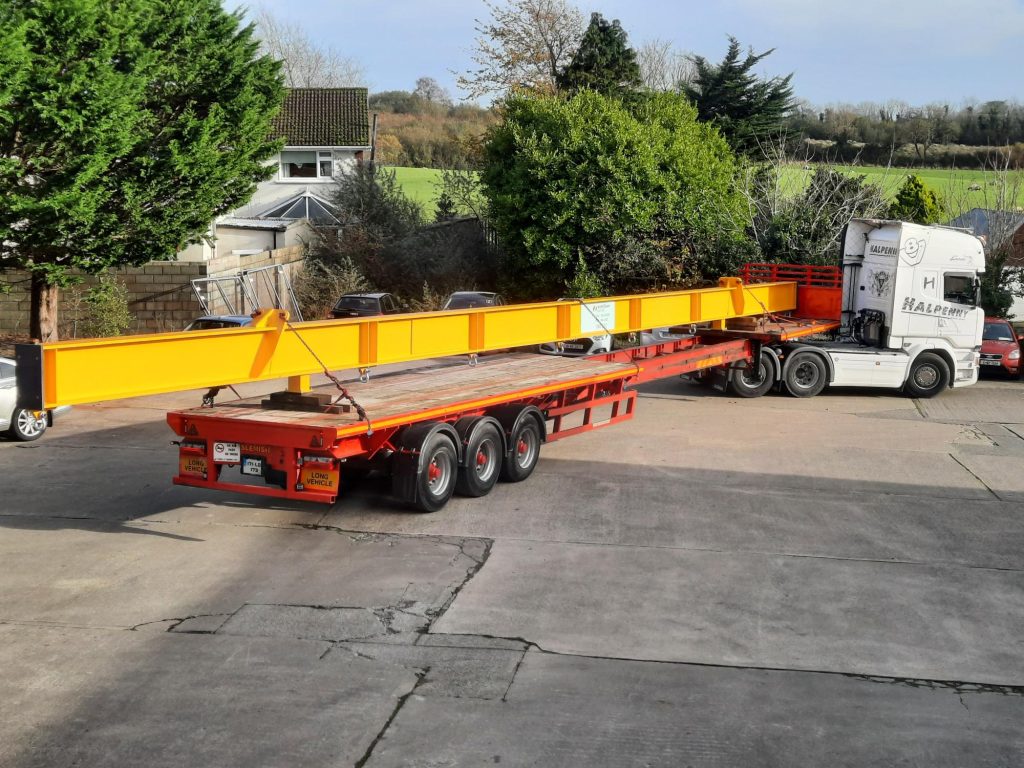
When catalogue equipment will not do the job, WH Scott designs and builds equipment that will: bespoke lifting beams, spreader beams and lifting frames, lifting gantries, jib and overhead travelling cranes, crane grabs, certified lifting points and the safety-critical steelwork that supports them.
Every stage sits inside one group, for industrial, rail, water, energy and infrastructure sites across the UK and Ireland. Our engineers model it in 3D CAD and prove it by calculation and finite element analysis; our own workshops cut, machine and coded-weld it; Metlab, our INAB-accredited testing arm, carries out the non-destructive testing; and we install, proof load test and certify it on site, then keep it under statutory thorough examinations for life. One organisation is accountable from the first site survey to the last certificate.
What we design and build
- Load-handling equipment — lifting beams, spreader beams, lifting frames, crane grabs, bespoke attachments and certified lifting points.
- Cranes, gantries and access — fixed, mobile and A-frame gantries, jib and overhead travelling cranes, crane bridges, runway beams, platforms, staircases, walkways and mezzanines.
- Structural and specialist fabrication — primary and secondary steelwork, handrails and barriers, test weights, water and wastewater treatment steelwork, and stainless steel for washdown and cleanroom environments.
How a project runs
1. Survey and specification. We measure the load and its centre of gravity, the span, headroom, travel, duty cycle, environment and site access, then agree the standards and execution class required.
2. Design and approval. Your equipment is modelled in 3D CAD in Autodesk Inventor and proved by structural calculations and finite element analysis. Drawings are issued in AutoCAD, PDF or large-format print up to A1 for your sign-off, with third-party verification where required.
3. Fabrication and testing. CNC cutting, milling and drilling, then assembly and coded welding by qualified structural steel fabricators with full material traceability. Welds are examined by dye penetrant, magnetic particle, radiographic or ultrasonic testing, then the equipment is surface prepared and coated.
4. Installation, testing and handover. On-site assembly, control integration, commissioning and proof load testing, turnkey under a named project manager, with operator familiarisation and a full documentation pack — drawings, calculations, traceability records, test certificates and declaration of conformity. Planned servicing follows.
Standards and certification
Fabricated structural steelwork is produced under a factory production control system certified to BS EN 1090-1 and executed to BS EN 1090-2, with approval up to Execution Class 2. Lifting beams, spreader beams, frames and grabs are designed to BS EN 13155, the European safety standard for non-fixed load lifting attachments. Overhead runway beams are tested to BS 2853. Welding procedures and welders are certified by Metlab, INAB-accredited under ISO/IEC 17020 and 17024. We are members of the Lifting Equipment Engineers Association and hold ISO 9001, 14001, 45001 and 27001 certification — see all certifications and accreditations.
Lifting equipment compliance in the UK and Ireland
In Great Britain and Northern Ireland, equipment in service falls under Lifting Operations and Lifting Equipment Regulations 1998 (LOLER) and PUWER, which require thorough examination by a competent person at statutory intervals. In the Republic of Ireland the duties sit in Part 2, Chapter 2 of S.I. No. 299 of 2007, where Regulation 57 names spreader beams and spreader frames among the lifting accessories that must be marked with their safe working load and thoroughly examined by a competent person.
Fabricated steelwork is UKCA or CE marked to BS EN 1090-1. New machinery and lifting accessories on the EU market are CE marked under the Machinery Directive 2006/42/EC until Regulation (EU) 2023/1230 applies from 20 January 2027, while Great Britain currently accepts either mark. We compile the technical file and declaration of conformity, and register your equipment for LOLER thorough examination from handover.
Related Services
![[Describe the photo you choose — for SEO]](https://whscottlifting.com/wp-content/uploads/2026/05/WHS-Gantry-Crane_V3.png)
Lifting Consultation
Lifting consultation services provide independent, expert advice on lifting operations, equipment selection, and material handling challenges. Delivered by experienced lifting engineers, this service supports safe, compliant, and efficient lifting solutions tailored to your site and application.
LOLER Thorough Examination & Certification (Lifting Equipment & Accessories)
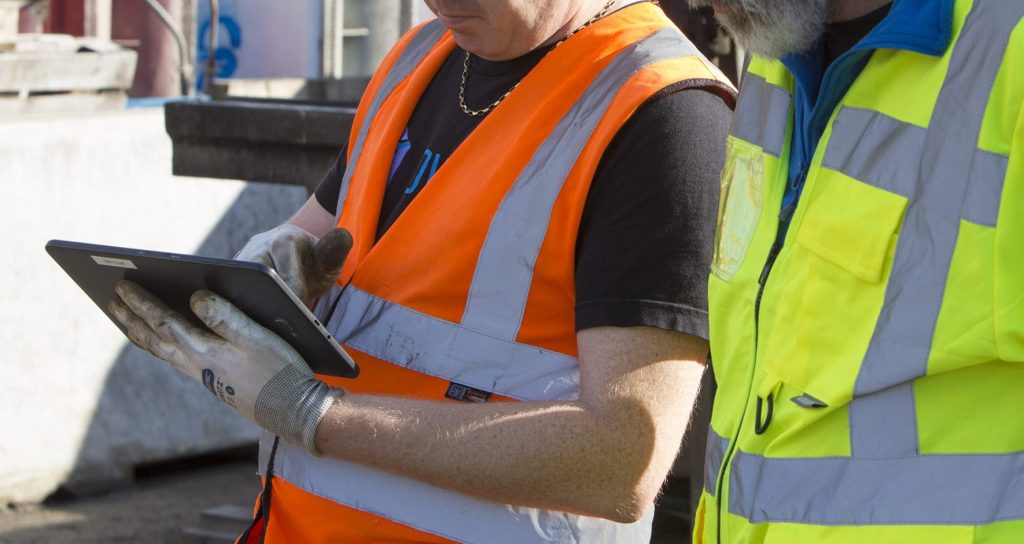
LOLER thorough examination and certification services ensure lifting equipment and accessories remain safe, compliant and legally operable under the Lifting Operations and Lifting Equipment Regulations 1998.
Preventative Crane Maintenance
Preventative crane maintenance services ensure the safe, compliant, and efficient operation of overhead cranes, gantry cranes, and hoisting systems. Planned servicing, inspections, and diagnostics reduce downtime, extend equipment lifespan, and support compliance with LOLER and PUWER regulations.
Frequently Asked Questions
What types of lifting equipment can be designed and fabricated?
Lifting gantries, overhead travelling cranes, jib cranes, lifting beams, spreader beams and lifting frames, crane grabs and load-handling attachments, access platforms and walkways, test weights, and safety-critical structural steelwork. Fabricated structures are produced up to approximately 100 tonnes.
Do you provide full turnkey lifting projects?
Yes. Design, structural calculations, fabrication, NDT, proof load testing, installation and commissioning are all delivered within the group under a named project manager, and the same group carries out the LOLER thorough examinations once the equipment is in service. One organisation is accountable from survey to statutory examination.
What design tools and formats are used?
The load to be lifted and, where it matters, its centre of gravity; the lifting points and centres; the span, headroom and travel required; the operating environment; any standards, execution class or client specification you must meet; and your required delivery date. A sketch, drawing or photograph is usually enough to start.
How is structural integrity verified?
Through design calculations, stress analysis and finite element analysis at the design stage; non-destructive testing during fabrication using dye penetrant, magnetic particle inspection, radiography or ultrasonic testing; and proof load testing before handover. Third-party verification is available where your specification requires it.
What information do you need to quote?
The load and, where it matters, its centre of gravity; the lifting points and centres; the span, headroom and travel; the operating environment; any standards or execution class you must meet; and your required date. A sketch, drawing or photograph is enough to start.
Does bespoke lifting equipment need UKCA or CE marking?
Almost always, but by different routes, and the marking is not always UKCA. Lifting accessories and machinery fall under the supply-of-machinery regulations, which require a technical file, a declaration of conformity and conformity marking: for Great Britain you may currently use either UKCA or CE marking, while Northern Ireland and the Republic of Ireland follow the EU rules and take CE marking (with UKNI alongside it where a UK body carried out the assessment). Fabricated structural steelwork is marked to BS EN 1090-1 under the construction products rules instead. We tell you which route applies to your equipment.
What is the difference between a lifting beam and a spreader beam?
A lifting beam takes the load in bending: it hangs from a top lifting point, usually a single one, with the load suspended from points along its underside. A spreader beam takes the load in compression: two slings run from the crane hook to each end of the beam, holding the lifting points apart. Lifting beams suit low-headroom lifts and single-point cranes; spreader beams suit long or flexible loads.
Do you cover Ireland as well as the UK?
Yes. WH Scott operates offices, depots and laboratories across the Republic of Ireland, Northern Ireland and Great Britain, so bespoke lifting equipment can be designed, fabricated, installed and then kept under statutory examination anywhere in either territory by the same group.
Get in Touch
Tell Us About Your Project
Whether you need a single piece of equipment or a fully engineered lifting system, our specialists can help. Tell us your load, environment and compliance requirements — we’ll do the rest.