
WH SCOTT
Crane Refurbishment & Modernisation
Overview
A crane that is structurally sound but electrically obsolete does not need replacing. It needs modernising.
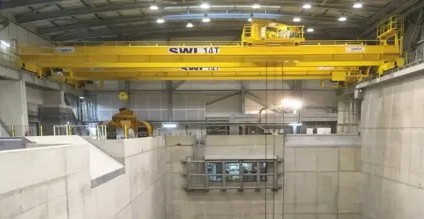
Crane refurbishment and modernisation extends the working life of overhead, gantry and jib cranes by rebuilding worn mechanical assemblies and replacing outdated control, drive and safety systems. It restores performance, closes compliance gaps and removes obsolescence risk — usually at a fraction of the cost of a new crane, and without the structural work, disruption and lead time that a replacement demands.
WH Scott has been working on lifting equipment since 1897. We refurbish and modernise cranes of any age and any manufacturer, including obsolete machines whose original supplier no longer trades, and we hand the crane back tested, certified and documented.
What Crane Refurbishment & Modernisation Includes
Survey, assessment and engineering design
- Full condition survey of structure, mechanisms, brakes, ropes, electrics and controls
- Identification of safety risks, performance losses and component obsolescence
- Structural and runway assessment, including rail alignment, end carriage condition and gantry steelwork
- Design working period (DWP) and safe working period assessment against BS ISO 12482 and FEM 9.755
- Engineering design of the refurbishment or upgrade, with drawings, calculations and a defined scope boundary
Safety system retrofits
- Anti-collision and zone-limitation systems
- Overload protection, load limiting and load indication
- Upper, lower and ultimate limit switches
- Anti-sway control for precision placement and operator workload
- Condition monitoring and operational data logging
Electrical and control system upgrades
- Inverter and variable frequency drive (VFD) retrofits on hoist, cross-travel and long-travel motions
- New control panels, contactors and switchgear replacing obsolete assemblies
- Radio remote control retrofits and pendant replacement
- Festoon, conductor bar and cable reeling system replacement
- Full rewire where insulation, terminations or documentation are beyond serviceable condition
Electrical and control system upgrades
- Inverter and variable frequency drive (VFD) retrofits on hoist, cross-travel and long-travel motions
- New control panels, contactors and switchgear replacing obsolete assemblies
- Radio remote control retrofits and pendant replacement
- Festoon, conductor bar and cable reeling system replacement
- Full rewire where insulation, terminations or documentation are beyond serviceable condition
Capacity, efficiency and lifecycle support
- Capacity uprating following structural assessment and recalculation
- Regenerative drives and energy efficiency upgrades, cutting energy draw and heat rejection
- Spare parts supply, including reverse-engineered and pattern parts for obsolete machines
- Post-upgrade load testing, commissioning and performance optimisation
- Recertification, updated technical documentation, and warranty on the work carried out
Cranes and Equipment We Refurbish and Modernise
- Overhead travelling cranes (EOT), single and double girder
- Gantry, semi-goliath and goliath cranes
- Portal cranes and jib cranes, including pillar-mounted and wall-mounted jibs
- Monorail, workstation and light crane systems
- Electric wire rope hoists, chain hoists and manual lifting mechanisms
- Grab, magnet and waste-handling cranes
- Legacy and obsolete crane systems, irrespective of original manufacturer
- Runways, rails, end carriages, walkways and access platforms
Our Process
- Initial survey and assessment — An engineer attends site and inspects structure, mechanisms, brakes, ropes, controls and electrical installation, then reviews duty classification, usage history, thorough examination reports and outstanding defects.
- Risk and performance analysis — We identify safety gaps, obsolescence, efficiency losses and remaining design life, and separate what is statutory from what is operational so the budget goes to the right place first.
- Solution design — A costed refurbishment or modernisation proposal, set against the operational case for replacement, with drawings, calculations and a clear scope boundary.
- Implementation — Mechanical, structural, electrical and control work carried out by our own directly employed engineers, planned around shutdowns and production windows.
- Testing and commissioning — Functional testing, load testing to the appropriate proof load, performance validation and safety verification.
- Certification and handover — Updated technical documentation, test certificates, a Report of Thorough Examination where applicable and, where a modification is substantial, a new Declaration of Conformity and UKCA or CE marking.
The standards we work to
- LOLER 1998 — thorough examination at 12-monthly intervals, 6-monthly for equipment that lifts people and for lifting accessories, or in accordance with a written scheme of examination
- PUWER 1998 — the duty to keep work equipment suitable, maintained and safe. This duty stays with you after any refurbishment, whoever carried it out
- S.I. No. 299 of 2007 — the equivalent Irish requirements for lifting equipment and work equipment across our Republic of Ireland operations
- Supply of Machinery (Safety) Regulations 2008 — conformity assessment where the work carried out creates a new machine
- BS 7121-1:2016 and BS 7121-2-7:2012+A2:2022 — safe use, inspection, maintenance and thorough examination of bridge and gantry cranes, including light crane systems
- BS EN 15011:2020 — design of bridge and gantry cranes (currently under revision by BSI)
- BS ISO 12482:2014 and FEM 9.755 — monitoring of crane design working period and hoist safe working period
- BS EN 1090 — execution of structural steelwork, where fabrication forms part of the scope
- Health and Safety at Work etc. Act 1974, section 6 — duties owed when refurbished lifting equipment is supplied on
Related Services
![[Describe the photo you choose — for SEO]](https://whscottlifting.com/wp-content/uploads/2026/05/WHS-Gantry-Crane_V3.png)
Preventative Crane Maintenance
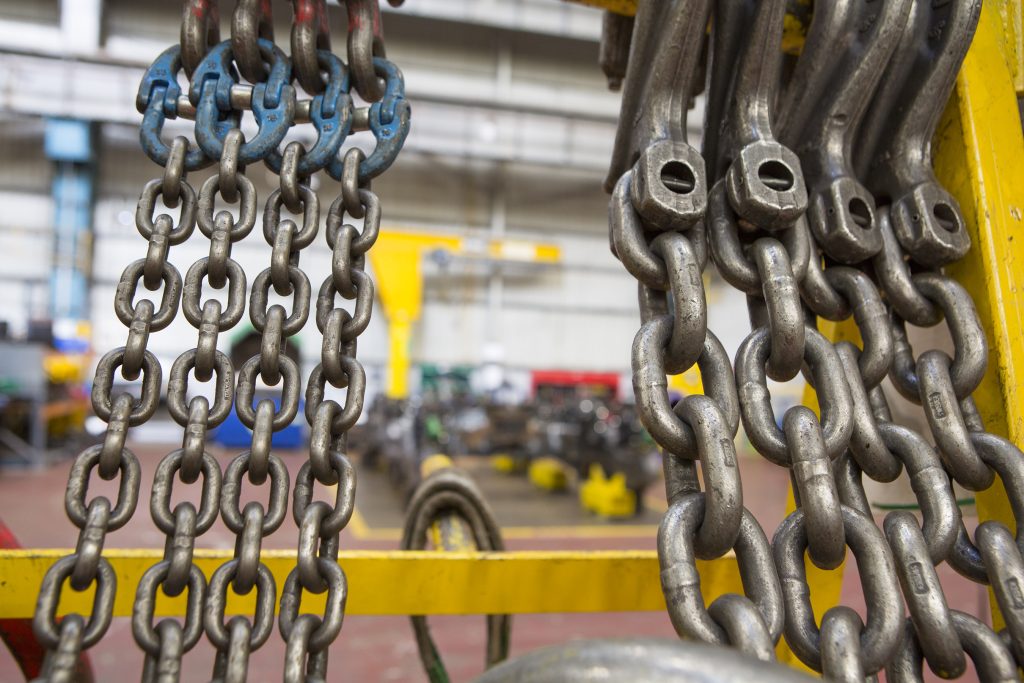
Preventative crane maintenance services ensure the safe, compliant, and efficient operation of overhead cranes, gantry cranes, and hoisting systems. Planned servicing, inspections, and diagnostics reduce downtime, extend equipment lifespan, and support compliance with LOLER and PUWER regulations.
Lifting Equipment Servicing, Maintenance & Breakdown Support
Lifting equipment servicing, maintenance and breakdown support ensures the safe, compliant, and efficient operation of cranes, hoists, and associated lifting systems. Planned maintenance programmes and rapid-response repair services minimise downtime, extend equipment lifespan, and maintain regulatory compliance.
Hoist General Overhaul
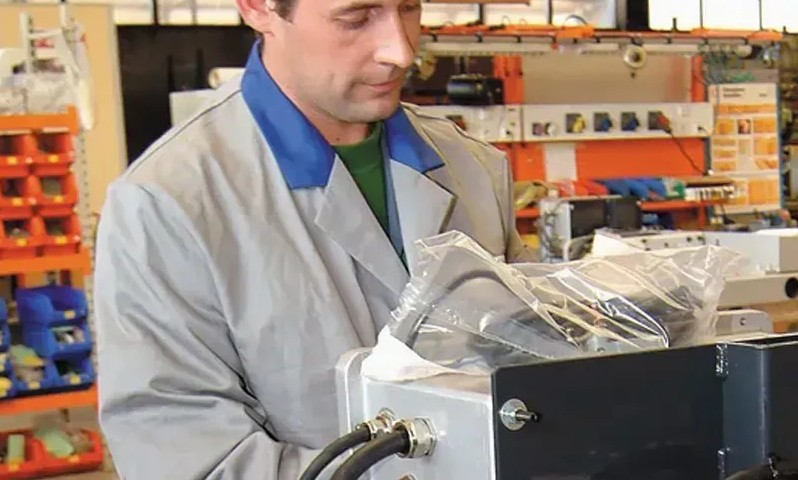
Hoist general overhaul services restore lifting equipment to safe, compliant working condition by replacing critical components, reassessing performance, and extending operational life. This service is typically performed as the hoist approaches the end of its Safe Working Period (SWP) to prevent failure and minimise unplanned downtime.
Frequently Asked Questions
When should a crane be refurbished instead of replaced?
Refurbishment is usually the right route when the structure and runway are sound but controls, drives, brakes or safety systems are worn, outdated or unsupported. Replacement makes more sense when the crane has reached the end of its design working period, when the runway is the constraint, or when the duty classification never matched the application. A condition survey settles it in a day.
Can modernisation improve crane lifting capacity?
Often, yes. Capacity uprating is possible where structural assessment and recalculation show the girders, end carriages and runway can carry the increased load, and where the hoist and drives are replaced to suit. It is an engineering exercise, not a paperwork exercise, and it usually triggers a new conformity assessment.
Will refurbishment help meet current safety regulations?
Refurbishment and modernisation are the normal route to closing the gap between an older crane and current expectations — adding overload protection, load indication, anti-collision, modern limit switches and compliant control systems. Your continuing duty under PUWER, and thorough examination under LOLER, remain yours whatever work is done.
Does crane modernisation reduce operational costs?
Typically it reduces four costs at once: maintenance spend, because worn and obsolete components are gone; energy, because inverter and regenerative drives draw less; downtime, because breakdown frequency falls; and production loss, because modern control gives faster, more precise placement.
Will a refurbishment or upgrade need a new Declaration of Conformity or UKCA marking?
It depends on how substantial the modification is. A rebuild to original specification usually does not. Introducing significant new hazards, replacing the method of control, or fundamentally changing what the machine does creates a new machine under the Supply of Machinery (Safety) Regulations 2008 — which means conformity assessment, a technical file, a Declaration of Conformity and UKCA or CE marking. We assess this before work starts.
What can be done if the spare parts are obsolete?
Obsolescence is the most common reason cranes get scrapped unnecessarily. Options are cross-referencing to a current equivalent, sourcing from specialist stockists, reverse-engineering and manufacturing a pattern part, or replacing the whole assembly with a modern system — usually the better answer for control gear, where a like-for-like obsolete part buys only a few more years.
How long does a crane refurbishment take, and how much production will I lose?
It depends on scope, access and lead times on major components, and the survey gives you a firm programme. Control and drive upgrades are frequently completed inside a planned shutdown. Structural work, hoist replacement and capacity uprating need longer, and are usually phased crane by crane so the facility keeps lifting.
Get in Touch
Tell Us About Your Project
Whether you need a single piece of equipment or a fully engineered lifting system, our specialists can help. Tell us your load, environment and compliance requirements — we’ll do the rest.