
Sectors
Agricultural Lifting Equipment & Farm Crane Systems
Lifting equipment and LOLER inspection for agricultural and agri-processing sites across the UK and Ireland.
Lifting Equipment in Agriculture
Agriculture runs on lifting. Feed and fertiliser, bulk bags and bales, grain, produce, and the machinery that moves all of it — handled in workshops, grain stores, pack houses and open yards, usually against a weather window or a harvest deadline. When a hoist or a telehandler goes out of service mid-season, the real cost is the days of work lost, not the repair invoice.
What counts as lifting equipment on a farm is also broader than most operators expect. LOLER (UK) and SI 299(IE) covers tractor foreloaders and front-end loaders, telehandlers, forklifts, workshop hoists and cranes, vehicle-mounted cranes, and every accessory used with them — chains, slings, shackles, eyebolts and lifting beams.
WH Scott has been engineering safety-critical lifting equipment since 1897 and now completes over 400,000 statutory examinations a year from offices across the UK and Ireland. For agricultural clients that means design, installation, inspection, repair and certification from one supplier, on sites including:
- Farms, estates and agricultural contracting businesses
- Grain stores, feed mills and bulk material handling facilities
- Dairy, livestock and poultry units
- Potato, vegetable and produce pack houses
- Agricultural engineering and machinery workshops
- Agri-processing and food production plants

Lifting & Safety Challenges on Farms
Awkward loads. Bales, bulk bags, IBCs, machinery attachments and engine components rarely offer a clean lifting point. Loads shift, swing and unbalance, and a lot of agricultural lifting still happens in open or semi-covered yards where wind, mud and uneven ground add to the risk. Correctly specified beams, frames and slings remove most of that guesswork.
Wear and environment. Dust, moisture, slurry, fertiliser and washdown chemicals attack chains, wire ropes, hooks and hoist brakes far faster than a clean factory would. Degradation is usually invisible until something fails, which is precisely why the examination interval exists.
Compliance gaps. On smaller holdings, lifting equipment is often not formally managed at all — no examination schedule, no records, no idea which items are due. LOLER and PUWER apply regardless of farm size, and missing paperwork surfaces at the worst possible moment: an HSE visit, an insurance renewal, or a claim after an incident.
Lifting people. Nobody should be raised in a telehandler bucket, a potato box or on pallet forks. People may only be lifted in equipment designed and examined for that purpose, on a six-monthly interval. HSE sets out how the regulations apply to the sector in Agricultural Information Sheet No. 28.

Farm Crane Systems, Inspection & Maintenance
Engineered lifting systems. Overhead gantry cranes and jib cranes for workshops and maintenance bays, handling tractors, implements and heavy components. Mobile A-frame gantries and bespoke lifting beams where the work moves around the site or the load will not sit square. Vacuum lifting beams and roll and reel handling systems where there is a processing or packing line. AUTEC radio remote control so the operator can stand clear of the load — useful where visibility or access is poor.
Statutory inspection and testing. LOLER (UK) and SI 299(IE) thorough examination, loose tackle and lifting accessory examination, PUWER assessment, proof load testing and certification. Reports are issued digitally through our online asset portal, so every certificate, defect and due date sits in one place when an auditor or insurer asks.
Maintenance and breakdown cover. Planned preventative maintenance, servicing, overhaul and modernisation, plus reactive breakdown support. Where equipment is ageing rather than failing, modernisation is usually cheaper than replacement. We also schedule examinations around your calendar — before harvest, not during it.
Design and fabrication. Gantries, platforms, frames, test weights and support steelwork designed and fabricated in-house to BS EN 1090, up to execution class EXC2.
Get in Touch
Tell Us About Your Project
Whether you need a single piece of equipment or a fully engineered lifting system, our specialists can help. Tell us your load, environment and compliance requirements — we’ll do the rest.
LOLER (UK) and SI 299(IE) Compliance in Agriculture
Agricultural lifting falls under exactly the same framework as any other industrial sector. The Lifting Operations and Lifting Equipment Regulations 1998 (LOLER) (UK) and SI 299(IE) require lifting equipment to be thoroughly examined by a competent person at set intervals. The Provision and Use of Work Equipment Regulations 1998 (PUWER) require it to be suitable, maintained and safely used. Neither has a small-farm exemption.
|
Equipment |
Minimum examination intervals |
|
Lifting accessories – chains, slings, shackles, eyebolts |
Every 6 months |
|
Lifting equipment used to lift people |
Every 6 months |
|
All other lifting equipment – telehandlers, foreloaders, forklifts, hoists, cranes |
Every 12 months |
|
Equipment covered by a written scheme of examination |
As set out in the scheme |
Intervals are minimums. Equipment working in dust, slurry or corrosive conditions, or on heavy seasonal duty, often warrants a shorter cycle under a written scheme of examination — which is a judgement your examining engineer should be making with you, not something to discover after a failure.
Every examination produces a Report of Thorough Examination, and those reports have to be kept and available. WH Scott issues them digitally and tracks renewal dates against each asset, so compliance is a report you can pull rather than a folder someone has to find. Work is carried out to the relevant BS EN standards by LEEA-member engineers, under ISO 9001:2015 and SafeContractor accreditation.
What We Deliver in Lifting & Handling Solutions for Agriculture
![[Describe the photo you choose — for SEO]](https://whscottlifting.com/wp-content/uploads/2026/05/WHS-Gantry-Crane_V3.png)
Overhead Gantry Cranes
Overhead gantry cranes designed for safe, efficient lifting, with bespoke configurations, installation, maintenance, and lifecycle support.

Jib Cranes
Wall- and pillar-mounted jib cranes for efficient, safe load handling in workshop environments.
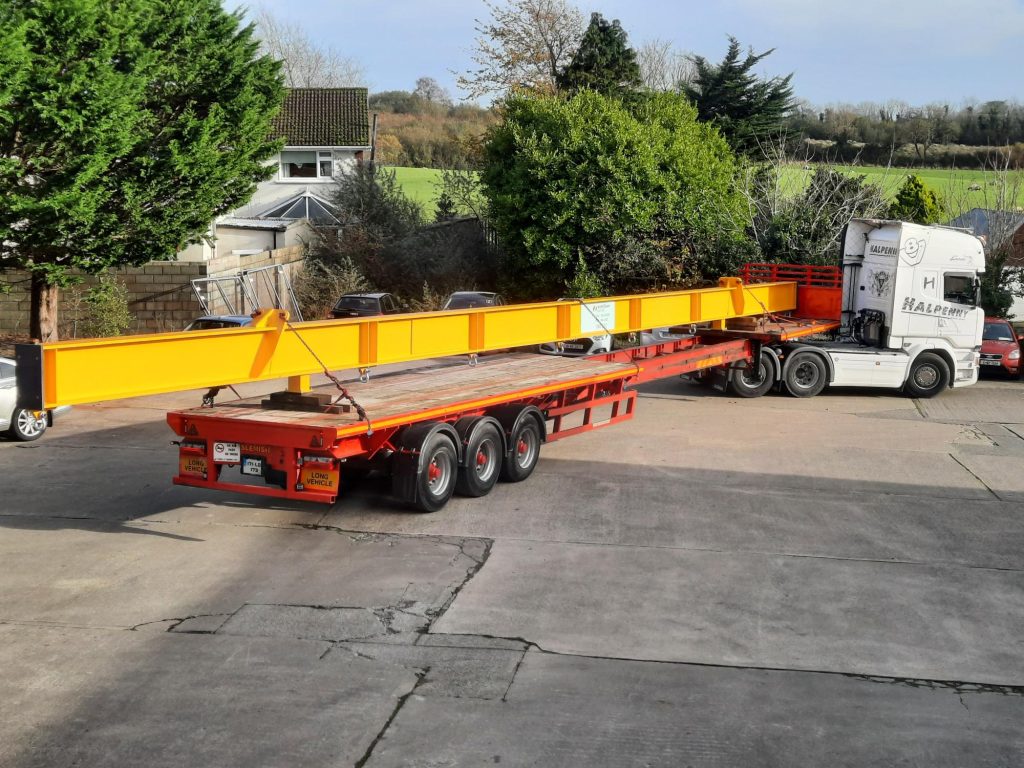
Lifting Beams & Lifting Frames
Custom lifting beams, spreader beams, and lifting frames designed for safe, balanced multi-point load handling.